The Packaging and Packaging Waste Regulation (PPWR) is beginning to affect every packaged product placed on the EU market. From 2026, EU packaging rules will progressively cover restricted substances, recyclable design, recycled-plastic content, packaging reduction, harmonised labelling and recycling at scale. Key requirements will take effect in stages in 2030, 2035, 2038 and 2040.
1. What Is the PPWR?
Definition: The Packaging and Packaging Waste Regulation (PPWR), Regulation (EU) 2025/40, covers the full life cycle of packaging, including restricted substances in packaging materials, design for recycling, recycled-plastic content, packaging reduction, labelling, reuse and packaging-waste management.[1]
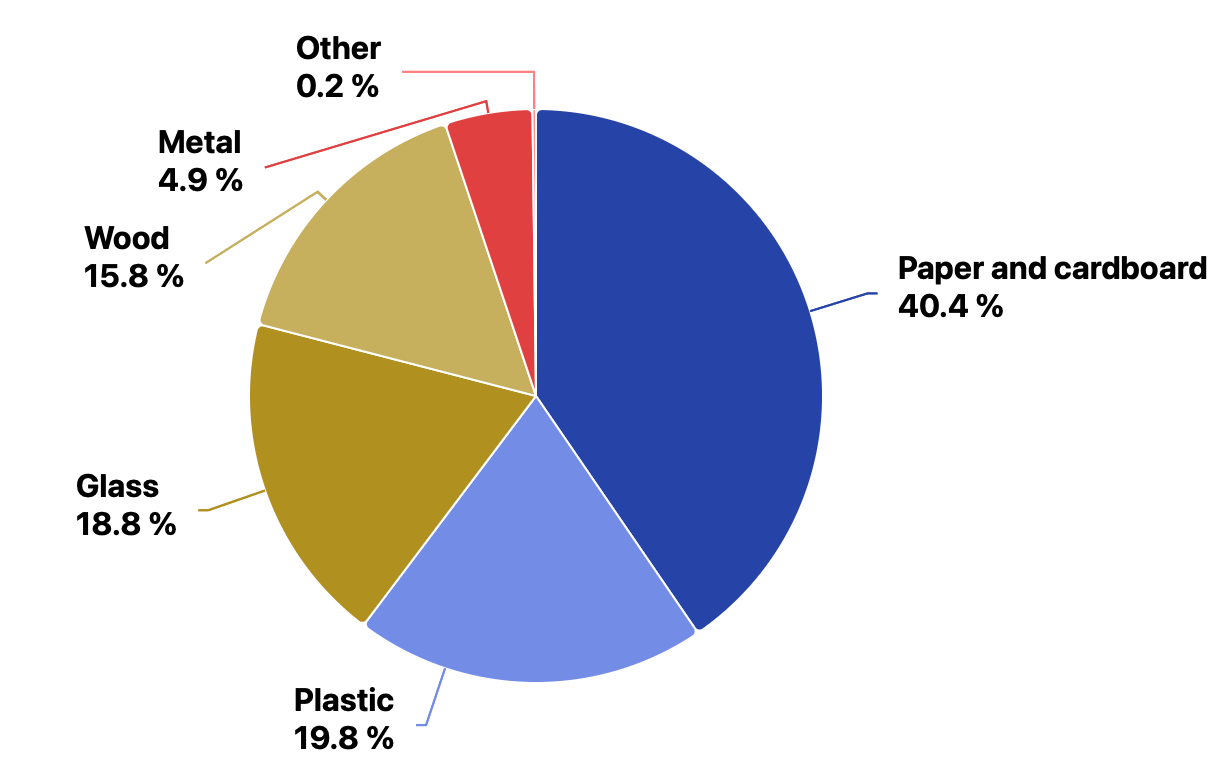
Objective: The latest Eurostat statistics show that the EU generated about 79.7 million tonnes of packaging waste in 2023, equal to 177.8 kg per person. Paper and cardboard accounted for 40.4%, plastic 19.8%, glass 18.8% and wood 15.8%.[2] The PPWR aims to reduce packaging waste, lower virgin-material consumption, increase recycled-material use and move the EU packaging system towards a circular economy.[3]
Timeline: The PPWR entered into force on February 11, 2025 and applies from August 12, 2026. It replaces Directive 94/62/EC and applies directly in Member States as an EU Regulation.[1]
2. Packaging Compliance Requirements by PPWR Phase
The PPWR is implemented in phases, and the detailed requirements vary by industry and packaging type. The timeline below summarises the main regulatory requirements by date and application.
Some PPWR provisions use a later-of mechanism, applying on a fixed date or after a defined period following the entry into force of a relevant delegated or implementing act, whichever is later. The final mandatory dates therefore need to be checked against subsequent EU secondary legislation.[1][4]
Application also differs by sector. Some packaging used with products within the scope of the EU Cosmetics Regulation, Regulation (EC) No 1223/2009, is contact-sensitive packaging under the PPWR and is therefore subject to the relevant recycled-plastic requirements.[1] For medical devices within the scope of Regulation (EU) 2017/745, the PPWR provides specific exemptions for some contact-sensitive packaging. For example, some medical-device packaging may be exempt from parts of the Article 6 recyclability requirements and the Article 7 minimum recycled-plastic requirements. Other applicable requirements still need to be assessed case by case.[1]
| Date | Scope | Key requirement |
|---|---|---|
| August 12, 2026 | All packaging | The PPWR applies. The combined concentration of lead, cadmium, mercury and hexavalent chromium in packaging and packaging components must not exceed 100 mg/kg.[1] |
| August 12, 2026 | Food-contact packaging | PFAS (per- and polyfluoroalkyl substances) become subject to the concentration limits in Article 5.[1] |
| From August 12, 2026 | All packaging | Article 6(1) requires packaging placed on the EU market to be recyclable; detailed Design for Recycling criteria will be implemented through later delegated acts.[1][4] |
| February 12, 2028 | Sales packaging | Empty space inside packaging must be reduced to the minimum needed for the packaging to function.[1] |
| From August 12, 2028 | Most packaging | Packaging will progressively use harmonised EU labels to identify material composition and support correct sorting by consumers.[1] |
| From February 12, 2029 | Reusable packaging | Packaging must indicate that it is reusable and provide information about the reuse system through a QR code or another digital carrier.[1] |
| From January 1, 2030 | Most packaging | Recyclability is assessed under Design for Recycling: Grade A ≥95%, Grade B ≥80% and Grade C ≥70%; below 70% is technically non-recyclable.[1] |
| From 2030 | Plastic packaging | Minimum recycled-plastic content begins: 30% for contact-sensitive PET packaging; 10% for other contact-sensitive plastic packaging; 30% for single-use plastic beverage bottles; and 35% for other plastic packaging.[1] |
| From January 1, 2030 | General packaging | Packaging weight and volume must be reduced to the minimum needed for its function, limiting double walls, false bottoms and unnecessary layers used only to increase perceived volume.[1] |
| From 2030 | Grouped, transport and e-commerce packaging | The maximum empty-space ratio should in principle not exceed 50%.[1] |
| From 2030 | Specific sectors and uses | Certain single-use plastic packaging listed in Annex V becomes restricted, including some single-use packaging in hotel and HORECA settings.[1] |
| From 2035 | Most packaging | Recycled at Scale requirements are added to Design for Recycling, considering whether packaging can be collected, sorted and recycled at scale in real systems.[1][4] |
| From January 1, 2038 | Most packaging | Grade C packaging may in principle no longer be placed on the EU market; packaging must achieve Grade A or Grade B.[1] |
| From January 1, 2040 | Plastic packaging | Minimum recycled-plastic content increases further: 50% for contact-sensitive PET; 25% for other contact-sensitive plastic; 65% for single-use plastic beverage bottles; and 65% for other plastic packaging.[1] |
3. What Does the PPWR Mean for EU Importers?
Under Article 18, importers may place on the EU market only packaging that meets the applicable PPWR requirements. Before a product is placed on the market, importers should confirm that the manufacturer has completed the applicable packaging conformity assessment and prepared the technical documentation, and should check the relevant labels and conformity documents.[1]
Importers must also retain the EU Declaration of Conformity. Documents for single-use packaging should in principle be retained for five years, while documents for reusable packaging should be retained for ten years. Importers must provide the relevant technical information when reasonably requested by a market-surveillance authority.[1]
For businesses importing cosmetics, medical devices, cleansing and care products, and other consumer goods, both product compliance and packaging compliance will become important parts of EU market-access management.
4. VINNER's PPWR Compliance Preparation
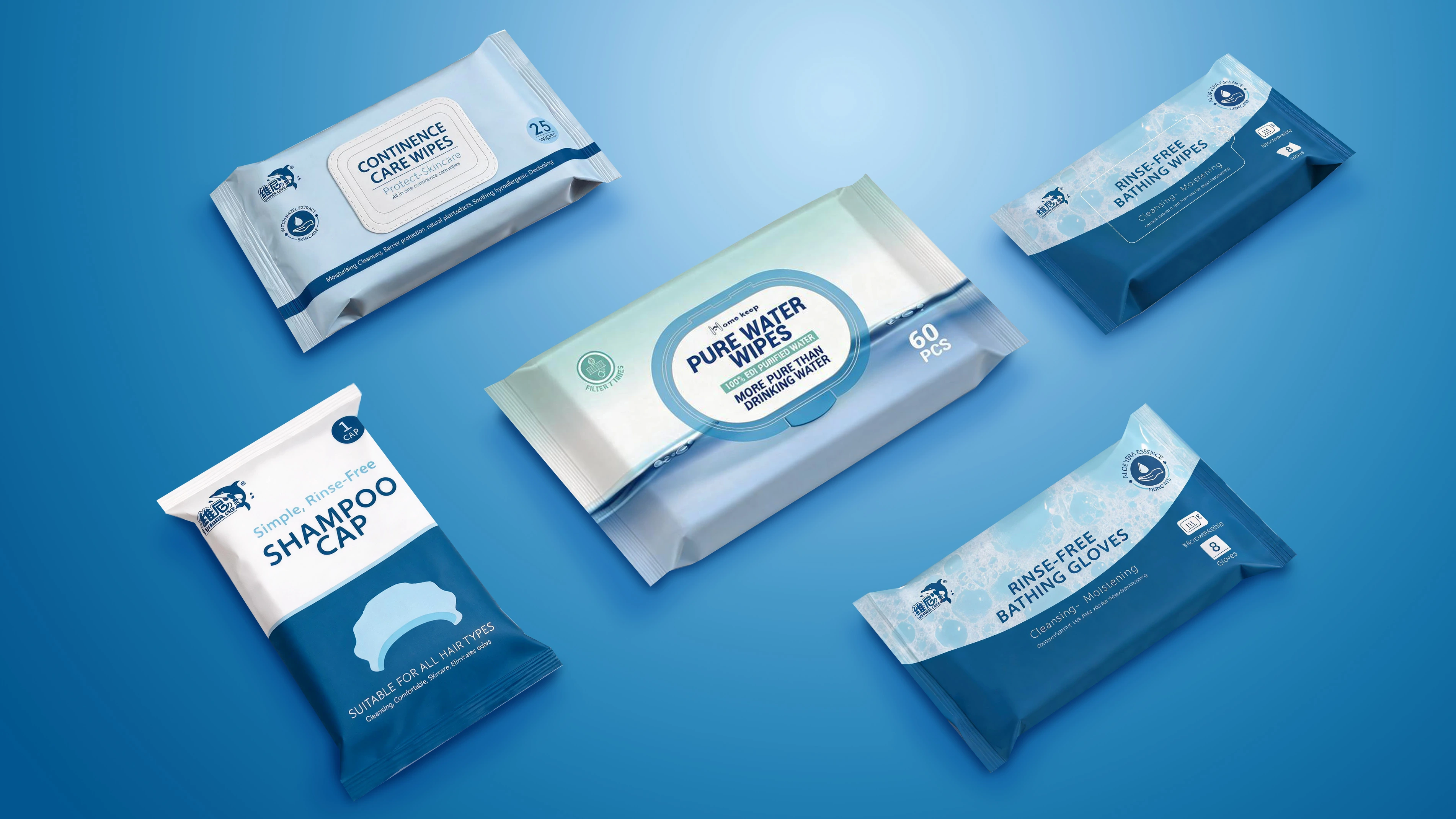
As of 2026, VINNER's branded products have completed the packaging-compliance assessment and documentation applicable at this stage. The requirements scheduled for 2030, 2035, 2038 and 2040 have also been incorporated into packaging design and supply-chain management. For OEM/ODM and contract-manufacturing projects, we can prepare the corresponding technical files, DoC and PPWR-related test reports.
Because some detailed assessment methods after 2030 still need to be specified by the European Commission through delegated and implementing acts, VINNER will continue updating its packaging-compliance requirements as the EU secondary legislation develops.[1][4]
5. References
- [1] European Parliament and Council. Regulation (EU) 2025/40 of 19 December 2024 on packaging and packaging waste (PPWR). Official Journal of the European Union, 22 January 2025.
- [2] Eurostat. Packaging waste statistics. Statistics Explained, European Commission.
- [3] European Commission. Directorate-General for Environment. Packaging waste – Packaging and Packaging Waste Regulation.
- [4] European Commission. Official guidance and secondary legislation concerning the implementation of Regulation (EU) 2025/40.