In 2026, the European Union formally entered the implementation-preparation phase for the Forced Labour Regulation (FLR). On September 3, 2026, the European Commission published its guidance in the Official Journal of the European Union, explaining the FLR's scope, forced-labour indicators, investigation procedures, risk-based enforcement and business due-diligence methods.
1. What the EU FLR Covers
The formal name of the FLR is Regulation (EU) 2024/3015 on prohibiting products made with forced labour on the Union market. The regulation was adopted and entered into force in 2024, while its core market ban will apply and be enforced from December 14, 2027. Products made with forced labour may then neither be placed or made available on the EU market nor exported from the EU.
| Item | Key FLR requirement | Source |
|---|---|---|
| Regulation | Regulation (EU) 2024/3015 on prohibiting products made with forced labour on the Union market | EU Regulation 2024/3015 |
| Application date | Fully applies and enforcement begins on December 14, 2027 | European Commission Single Portal; Regulation Article 39 |
| Products covered | In principle, all products, regardless of origin, product type or industry | Commission Guidelines §3.1 |
| Businesses covered | Economic operators placing products on, making them available on, or exporting them from the EU; no general company-size exemption | Commission Guidelines §3.1 |
| Supply-chain scope | Forced labour at any relevant stage, including extraction, harvesting, production, manufacturing or processing, may bring the finished product within the FLR | Regulation Article 2(7); Guidelines §3.1 |
| Minimum-share exemption | There is no general minimum-share exemption; a product may remain in scope even when the forced-labour component is a small part of the finished product | Guidelines §3.1 |
| Definition of forced labour | Uses the core definition in ILO Convention No. 29, focusing on whether work is voluntary and whether a penalty or coercive threat exists | Regulation Article 2; Commission Guidelines §3.2 |
| Regulatory approach | EU competent authorities use a risk-based approach for preliminary assessment, investigation and enforcement | Regulation Article 14 |
| Investigations outside the EU | When suspected forced labour occurs outside the EU, the European Commission is in principle the Lead Competent Authority | Regulation Article 15 |
| Duty to provide information | During a preliminary investigation, authorities may request measures taken to identify, prevent, mitigate, end and remedy forced-labour risks; businesses generally respond within 30 working days | Regulation Article 17 |
| Measures after confirmation | Authorities may prohibit continued placing, making available or exporting, and require products already on the market to be withdrawn and disposed of; member-state penalties may apply for non-compliance | Regulation Articles 20, 23–25 and 37 |
| Inventory produced before 2027 | Not automatically exempt; if products remain placed or made available on the EU market after December 14, 2027, they may still be in scope even if made or imported earlier | Commission Guidelines §3.1 |
| Whether FLR certification exists | The FLR does not establish a universal “FLR certification” or a general mandatory audit or periodic-reporting duty for all businesses | European Commission FLR Portal |
2. How Does the FLR Identify Forced Labour?
The FLR uses the concept of forced labour established by the International Labour Organization's Forced Labour Convention, 1930 (No. 29).
The core assessment can be summarized in two questions:
First, is the work genuinely voluntary? Did the employee enter the employment relationship freely and with sufficient information, and can they end it freely?
Second, is there a menace of penalty or coercion, such as violence or threats, restricted movement, debt bondage, withheld wages or identity documents, threats of dismissal or deportation, or abuse of a worker's vulnerability? The Commission's 2026 guidance also notes that abusive overtime demands may indicate involuntary work.
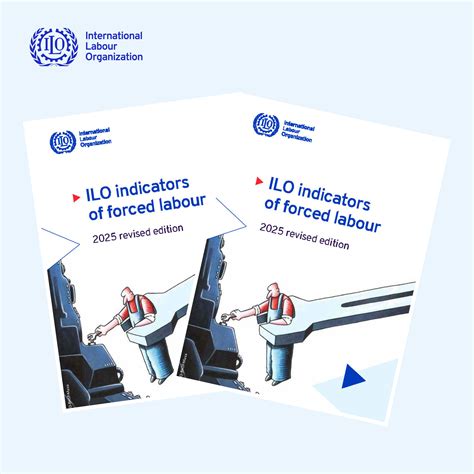
Does Overtime Equal Forced Labour?
No. The ILO gives a clear explanation: overtime does not automatically constitute forced labour. The first question is whether it complies with working-time and overtime limits under the applicable local law and collective agreements. The next questions are whether workers can make a genuine choice and whether a threat of penalty exists.
What Should Responsible Labour Management Include?
- Overtime hours comply with local law and applicable collective agreements;
- Employees can make a genuine choice within the limits allowed by law;
- Overtime pay and benefits are provided as required by law;
- Employees are not forced into overtime beyond legal limits through fines, withheld pay, threats of dismissal or other penalties.
The ILO also emphasizes that overtime may constitute forced labour when it exceeds legal weekly or monthly limits and workers are compelled to continue through threats of penalty. Even when employees can theoretically refuse, forced-labour concerns may arise if fear of losing their jobs or minimum wages leaves them with no real choice.
3. How Should EU Importers Prepare Early?
The European Commission has defined the period from 2026 through December 14, 2027 as the FLR implementation-preparation phase.
For importers, the priority is to build an evidence system that can support a product supply-chain investigation.
- First, improve supply-chain transparency and trace FLR compliance across the full chain: Product → Manufacturer → Key Suppliers → Key Raw Materials → Upstream Origin.
- Second, incorporate forced-labour requirements into the Supplier Code of Conduct, purchasing agreements or supplier-qualification system, using a level of due diligence proportionate to the risks of the product, region, industry and supplier.
- For lower-risk suppliers, document reviews, self-assessments and supplier declarations may be appropriate. Higher-risk suppliers may require third-party social audits, on-site assessments, worker interviews or deeper raw-material tracing.
4. What FLR Supporting Evidence Can VINNER Health Provide to European Importers?
For European importers, supplier value is shifting from simple contract manufacturing toward responsible suppliers with stronger ethics, human-rights practices and regulatory readiness.

- Third-party audits: VINNER Health has completed a SMETA 4-Pillar Audit covering labour rights, employee health and safety, working conditions and business ethics. It gives importers third-party evidence of labour and social-responsibility management at the manufacturing site. VINNER Health also maintains ISO 9001, ISO 13485, ISO 22716, ISO 14001 and ISO 45001 management systems covering quality, environment and occupational health and safety.
- Cooperation: To support FLR due diligence, VINNER can work with European importers to provide and establish evidence of labour-rights protection and the absence of forced labour across our own operations and the supply chain.
The FLR does not require businesses to use one fixed combination of documents. The Commission's guidance focuses on whether a business can provide relevant, genuine and verifiable information and show that it took reasonable measures against the actual risks in its supply chain.
5. Conclusion
A transparent, traceable supply chain that can produce evidence will become an increasingly important capability and strategic asset for cooperation in the European market. VINNER Health's value is to provide the world with ethical, affordable and effective infection-control, care and cleansing products.
References
- [1] European Parliament and Council. Regulation (EU) 2024/3015 of 27 November 2024 on prohibiting products made with forced labour on the Union market.
- [2] European Commission. Commission Notice — Guidelines on the application of Regulation (EU) 2024/3015, C/2026/4637, Official Journal of the European Union, 3 September 2026.
- [3] European Commission. Forced Labour Single Portal.
- [4] European Commission. What is the Forced Labour Regulation and how does it work?
- [5] International Labour Organization. ILO Helpdesk — Questions and Answers on Business and Forced Labour.
- [6] International Labour Organization. Forced Labour Convention, 1930 (No. 29).